What Is Sheet Metal Nesting Software? How It Reduces Material Waste and Cutting Cost
By Panshul Technologies LLP
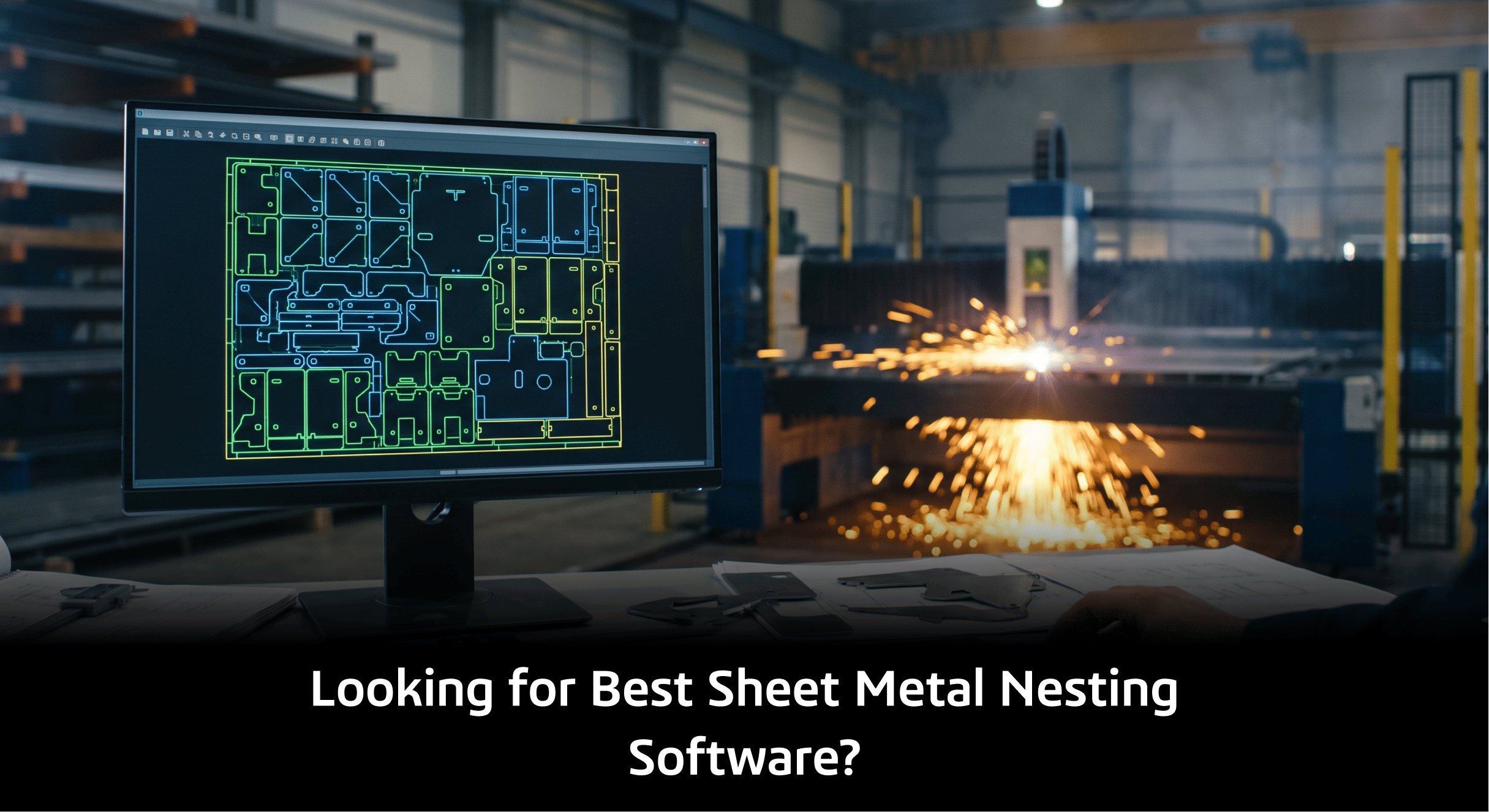
Best Sheet Metal Nesting Software? How you can Reduce Material Waste and Cutting Cost.
Every fabrication shop buys sheet and plate by weight, but sells finished parts. The gap between the two is scrap, and a large part of that gap is decided before the machine starts cutting: by how the parts are arranged on the sheet.
This guide explains what sheet metal nesting software is, where material waste actually comes from, how nesting software helps with laser, plasma and other CNC cutting, and what to check when choosing a solution. It is written for fabrication owners, production managers and manufacturing engineers who want a practical view, not a sales pitch.
What Is Sheet Metal Nesting Software?
Sheet metal nesting software arranges parts on a sheet or plate so that as much material as possible is used, then generates the NC (CNC) program that tells the cutting machine how to cut them. It replaces manual layouts with automated placement, toolpath generation and, in many systems, cost estimation and remnant tracking.
In simple terms, "nesting" is a packing problem. You have a list of parts in different shapes and quantities, and a set of sheets in fixed sizes. The software decides where each part goes, in what orientation, and in what cutting sequence, so the machine produces the required parts with minimum scrap and minimum cutting time.
Good CNC nesting software typically does three jobs in one workflow:
• Layout: places parts on the sheet using rectangular or true-shape (irregular-shape) nesting.
• Toolpath programming: creates cutting paths with lead-ins, cutting order and process parameters suited to the machine.
• Production data: supports cost and time estimates, material tracking and links to quoting or ERP systems, depending on the package.
Where Material Waste Comes From
Before choosing software, it helps to understand why scrap occurs in the first place.
1. Poor or rushed layouts
When programmers place parts by hand, especially under delivery pressure, the first workable layout often becomes the final one. Gaps between parts, unused corners and inefficient orientations add up across hundreds of sheets.
2. Unused remnants
Every job leaves offcuts. If these are not recorded, labelled and reused, they end up in the scrap bin even when they could have served a future order.
3. Manual programming time
Manual nesting is slow. When a job must be released quickly, there is little time to try alternative layouts, so utilization suffers and programming becomes a bottleneck.
4. Mixed jobs and small batches
High-mix, low-volume work makes it hard to group parts of the same material and thickness efficiently. Without automated grouping, sheets are often cut with spare capacity.
5. Inefficient cutting paths
Waste is not only material. Long travel moves, excess pierces and a poor cutting sequence increase cycle time, consumable wear and machine hours.
How Nesting Software Reduces Material Waste and Cutting Cost
Better material utilization
Material utilization is the share of a sheet that becomes usable parts. Nesting software tests many arrangements quickly and uses algorithms such as true-shape nesting and part-in-part nesting (placing small parts inside the cut-outs of larger ones) to use space that a manual layout would leave empty.
Faster programming
Automatic nesting reduces the time spent preparing each job. That frees programmers for exceptions and gives production planners shorter lead times.
Lower cutting time
Optimized toolpaths reduce unnecessary movement. Techniques such as common-line cutting, where available and suitable for the material and process, can reduce the length of cut and the number of pierces.
Remnant reuse
Software that tracks remnants lets planners consider offcuts when nesting new jobs, instead of always starting with a full sheet.
More accurate costing
Cost and time estimators help quote jobs on realistic material and machine-time figures, which protects margins on repeat and custom work.
Note on savings: the benefit you see depends on your part mix, materials, machines and current practices. Be cautious of any source that promises a fixed percentage saving without knowing your shop. A sensible approach is to nest a sample of your own past jobs and compare the results.
Nesting for Different Cutting Processes
The nesting logic is similar across processes, but each process has its own constraints.
Laser cutting nesting
Fiber and CO2 lasers cut thin to medium sheet quickly and with narrow kerf, so tight part spacing is possible. Nesting must manage pierce points, lead-ins, small features and heat build-up on thin parts, and it should support automatic part recognition and tight packing.
Plasma cutting nesting
Plasma is widely used for thicker plate and structural fabrication. Kerf is wider and heat-affected zones are larger than laser, so spacing, lead-ins and hole quality matter. Software should handle process-specific parameters rather than apply a single set of rules to every machine.
Oxyfuel, waterjet and router
Oxyfuel is common for heavy plate, waterjet is used for heat-sensitive or varied materials, and routers handle non-metals and some soft metals. A single nesting platform that programs several of these reduces the number of tools a shop has to maintain.
Punching and combination machines
Punch and laser/punch combination machines need tool selection, turret management and sequencing in addition to layout. This is a different programming problem from profile cutting and is usually handled with dedicated software capabilities.
Key Features to Look for in Nesting Software
.
Common Mistakes When Adopting Nesting Software
• Judging only by price. The cheapest package may not support your machine type, or may lack the nesting method your parts need.
• Ignoring post-processors. If the NC output is not tuned to your machine controller, programmers will spend time fixing code.
• Skipping CAD data quality. Open contours, duplicate lines and wrong layers in drawings will cause nesting problems in any software.
• Not tracking remnants. Without a disciplined offcut process, even the best software cannot reuse what is not recorded.
• No training plan. Nesting software gives better results when programmers understand the parameters, not just the default settings.
Best Practices for Better Material Utilization
1. Standardize sheet sizes and material grades where possible.
2. Keep your part geometry clean and consistent before importing.
3. Group jobs by material and thickness to give the software more parts to work with.
4. Label and record remnants as soon as a job is finished.
5. Review nesting results regularly and compare utilization across jobs.
6. Include programmers and operators when selecting software, because they use it daily.
Where SigmaNEST Fits
SigmaNEST is a CAD/CAM nesting software developed by SigmaTEK (now part of Siemens) for programming cutting and punching machines. According to the manufacturer, it supports laser, plasma, oxyfuel, waterjet, router, punch and combination machines, and offers capabilities such as true-shape nesting, part-in-part nesting, automatic part recognition, and cost and time estimators.
SigmaNEST is offered in packages for different needs. For profile cutting, the manufacturer describes levels such as TrueShape (intelligent nesting), Techno (more complex profiling) and PowerPack (high-volume production). Punch machines are covered by dedicated SigmaNEST Punch packages. Exact features differ by package, so confirm what is included for your machine and workflow.
SigmaNEST also has related solutions for other fabrication steps. SigmaTUBE addresses tube and pipe cutting, and SigmaBEND addresses press brake bending, so shops that process tube or form sheet metal can look at these separately instead of assuming the nesting package covers them.
Panshul Technologies is an authorized solution provider for SigmaNEST in India, supporting fabricators with product information, implementation guidance and technical support. Because every shop's machines, materials and part mix are different, the most reliable way to judge the benefit is to test the software on your own jobs.
Conclusion
Sheet metal nesting software turns material utilization from a programmer's judgement call into a repeatable, measurable process. It places parts efficiently, generates machine-ready toolpaths, and gives planners better data on material and cutting time. The value depends on your machines, part mix and current workflow, so the best starting point is to understand where your waste occurs today.
If you are evaluating nesting software for laser, plasma or other CNC cutting machines, speak with the engineering software experts at Panshul Technologies. We can help you understand which SigmaNEST package suits your process and how it would fit your existing design and production workflow.
FAQ Section
How is nesting software different from the nesting built into my machine controller?
Controller-based nesting is usually limited to basic layouts and one machine. Dedicated nesting software offers more nesting methods, supports multiple machines, can track remnants and costs, and works from CAD files before the job reaches the shop floor.
Does nesting software work with DXF and DWG files from SOLIDWORKS?
Most nesting software imports common CAD formats such as DXF and DWG, and many offer direct CAD integration. Check the specific formats and CAD systems supported by the package you choose, and test with your own files.
What is true-shape nesting?
True-shape nesting places parts according to their exact outline, instead of treating them as rectangles. This allows parts to interlock and can use space that rectangular nesting would waste.
Is nesting software only useful for large fabrication shops?
No. Smaller shops with mixed jobs and frequent re-nesting often benefit because programming time and remnants are significant for them too. The right package depends on machine type and volume.
Can one nesting software program laser, plasma and waterjet machines together?
Some platforms support multiple cutting processes within a single system. According to the manufacturer, SigmaNEST supports laser, plasma, oxyfuel, waterjet, router and punch machines. Confirm that your specific machine and controller are supported with a post-processor.
Can nesting software handle tube cutting and bending?
Profile nesting for flat sheet and plate is a separate task from tube nesting and press brake programming. In the SigmaNEST family, SigmaTUBE and SigmaBEND are separate solutions for those needs.
How do I measure material utilization?
Divide the area (or weight) of usable parts by the area (or weight) of the sheets consumed, over a defined period or job set. Compare results before and after software, using the same jobs where possible.